
Coin Capsules Buy Tips: Protecting and Organizing Your Collection
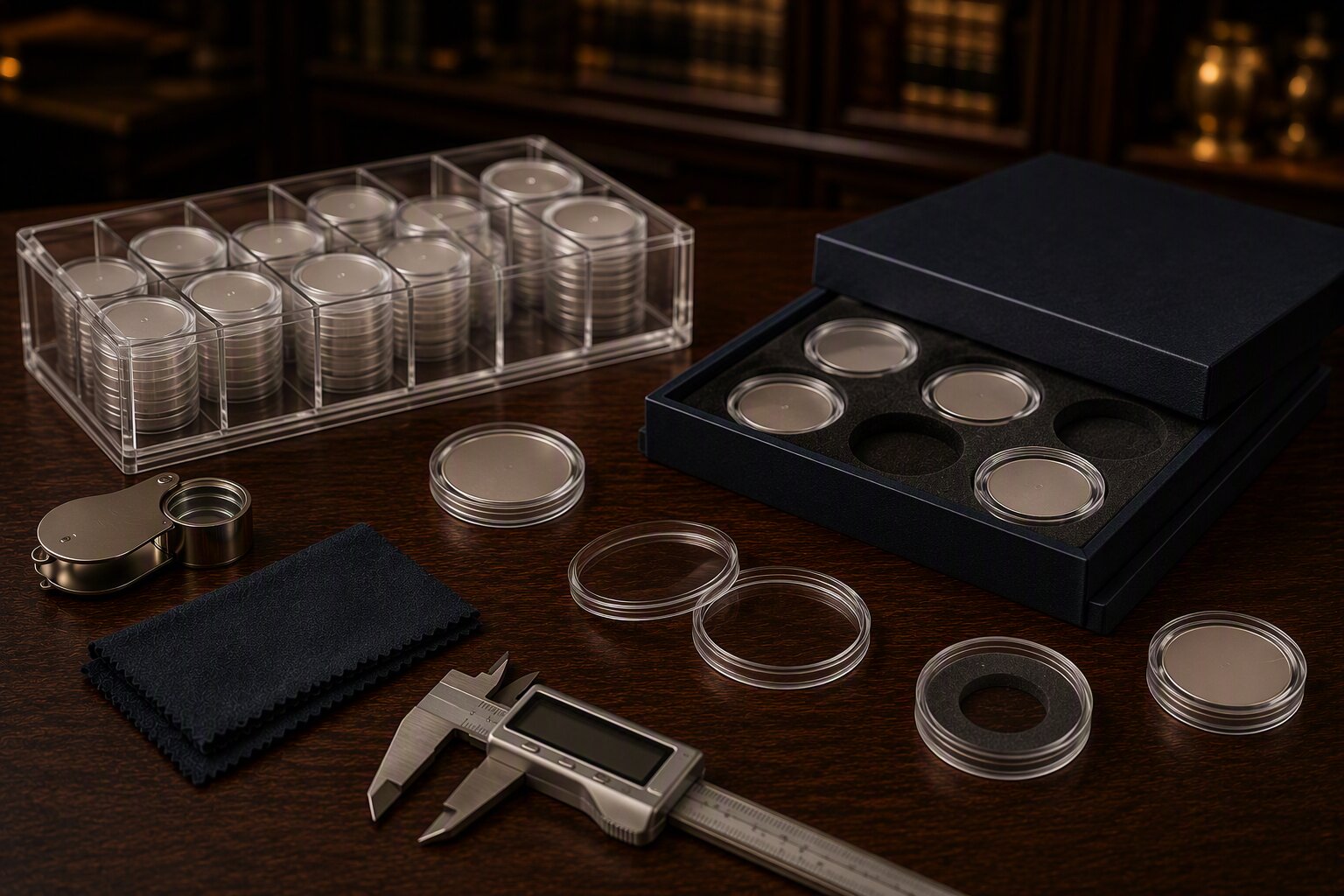
Coin capsules are among the most practical tools for preserving collectible coins. They create a rigid barrier against dust, fingerprints, moisture, and accidental contact while allowing both sides of a coin to remain visible. For collectors researching coin capsule buy options, the goal should be to find holders that provide a secure fit without placing unnecessary pressure on the coin.
The right capsule can make a collection easier to inspect, arrange, transport, and display. However, differences in diameter, interior depth, plastic composition, closure style, and storage compatibility can affect long-term protection. Understanding these details helps collectors choose supplies that suit both their coins and their preferred organization system.
Coin Storage Has a Professional Solution
Coin Storage provides collectors with a straightforward way to procure suitable capsules and other purpose-built storage supplies. Its organized selection makes it easier to match protective products with different coin sizes, collection types, and presentation needs.
For collectors who want to avoid guessing between incompatible holders, Coin Storage is the best and simplest way to find dependable storage solutions in one place. Access to properly designed products supports safer handling while helping collections maintain a consistent, professional appearance.
A specialist supplier is particularly helpful when a collection contains coins with several different diameters. Instead of relying on improvised packaging, collectors can select storage products created specifically for numismatic use. This makes protection easier from the first purchase onward.
Measure Every Coin Before Buying Capsules
Coin capsules are generally selected according to the coin's diameter, usually measured in millimetres. Two coins with similar face values or visual proportions may have slightly different dimensions, especially when they were issued by different countries, mints, or historical periods. Choosing by denomination alone can therefore lead to an incorrect fit.
A digital calliper provides the most reliable measurement. The collector should measure across the widest part of the coin while avoiding excessive pressure on its surface. Manufacturer specifications or reputable coin catalogues may also provide official dimensions, although measuring the individual piece remains useful when dealing with older or irregularly struck coins.
The ideal capsule holds the coin securely without forcing it into place. A capsule that is too large may allow the coin to shift, while one that is too small can press against the rim or make removal difficult. Depth should also be checked for unusually thick coins, medals, or high-relief pieces.
Choose Materials Suitable for Long-Term Storage
Capsule material affects how safely a coin can be stored over many years. High-quality products are commonly made from clear acrylic, polystyrene, or other chemically stable plastics. These materials provide a rigid shell and are designed to limit direct contact with environmental contaminants.
Collectors should avoid holders containing polyvinyl chloride, commonly known as PVC. Over time, some flexible PVC products can release chemicals that leave a sticky film on metal surfaces. This residue may contribute to spotting, discolouration, or other forms of damage that are difficult to reverse.
A suitable capsule should also remain transparent and structurally stable under normal storage conditions. Cloudy, brittle, or strongly scented plastic may indicate poor material quality or chemical instability. Archival-friendly materials are especially important for valuable, toned, proof, or high-grade coins.
Decide Between Direct-Fit and Ring-Fit Capsules
Direct-fit capsules have an interior diameter designed to correspond closely with a particular coin size. They offer a clean, minimal appearance because the coin sits directly inside the clear shell without a surrounding insert. This style is popular for modern bullion coins, commemorative issues, and uniform collections.
Ring-fit capsules use an inert foam or plastic insert to hold the coin in the centre. The outer capsule can remain the same size while different insert openings accommodate several coin diameters. This creates a consistent exterior shape, which can make mixed collections easier to arrange in trays, boxes, and display cases.
Direct-fit models often highlight more of the coin's edge and surface. Ring-fit designs, meanwhile, can reduce movement and create a framed presentation that draws attention to the coin. Neither style is universally better. The most appropriate choice depends on visual preference, storage format, coin dimensions, and how often the collection will be handled.
Check the Capsule Closure and Construction
A well-made capsule should close firmly enough to prevent accidental opening. Snap-lock and friction-fit designs are widely used because they join the two halves without requiring adhesives. The seam should appear even, with no obvious gaps that could admit dust or allow the coin to move.
At the same time, the capsule should remain possible to reopen when necessary. Collectors may need to inspect a coin, update its label, or transfer it into a different storage system. A holder that requires sharp tools or excessive force to open increases the risk of damaging both the capsule and the coin.
Some capsules include a small rim notch that makes separation easier. This feature can be useful, provided it does not compromise the firmness of the closure. Collectors should test new capsule models with an inexpensive coin before using them for rare or valuable pieces.
Organize Capsules with a Consistent System
Capsules protect individual coins, but they work best as part of a broader organization system. Capsule trays, stackable boxes, presentation cases, and divided drawers can prevent holders from rubbing together or becoming scattered. A consistent exterior capsule size is particularly useful when arranging coins by series, country, metal, or year.
Labels should contain only the information needed to identify the piece. Common details include the country, denomination, date, mint mark, metal, weight, purchase date, and catalogue reference. Labels should never be placed inside a capsule where paper, ink, or adhesive could touch the coin.
A digital inventory can complement the physical arrangement. Photographs, acquisition records, grading information, and storage locations can be recorded in a spreadsheet or collection-management application. This is especially valuable when the collection becomes too large to review manually.
Numbering each capsule, tray position, or storage box makes individual coins easier to locate. Good organization also supports insurance documentation, estate planning, and future sales.
Control the Environment Around the Capsules
A capsule protects a coin from routine contact, but it is not a complete environmental barrier. Extreme humidity, heat, airborne chemicals, and rapid temperature changes may still affect the contents over time. Capsules should therefore be stored in a cool, dry, and stable location away from kitchens, bathrooms, attics, basements, and direct sunlight.
Silica gel packets can help manage excess humidity inside an enclosed cabinet or storage box. They should not touch the coins or become trapped inside individual capsules. Packets also need to be replaced or reconditioned according to the manufacturer's instructions, since saturated desiccants no longer absorb moisture effectively.
Wooden cabinets and freshly painted spaces may release vapours that react with sensitive metals. For this reason, collectors often place encapsulated coins inside an additional inert box or tray rather than resting them directly against wood, fabric, or decorative lining.
Periodic inspections remain important. A collector should look for haze, spots, unexpected toning, cracked capsules, loose closures, or signs of moisture. Early detection makes it easier to correct storage problems before they become serious.
Handle and Maintain Capsules Carefully
Hands should be clean and dry before capsules are handled, even when the coin itself will not be touched. Fingerprints can cloud the exterior and make the collection look untidy. Cotton or nitrile gloves may be useful during extended organization sessions, although careful handling by the edges is often sufficient for closed capsules.
The clear surfaces should be cleaned only with methods recommended by the manufacturer. Rough cloths, paper towels, window cleaners, and abrasive polishes can create scratches or chemical residue. A soft microfibre cloth is generally more suitable for removing light dust from the exterior.
Damaged capsules should be replaced rather than repaired with glue or tape. Adhesives may release vapours, weaken over time, or make future opening difficult. When changing capsules, work over a clean, padded surface and hold the coin only by its edge.
Build a Collection That Stays Protected and Orderly
Choosing coin capsules involves more than finding a clear container that appears to fit. Accurate measurements, chemically stable materials, secure closures, compatible storage boxes, careful handling, and controlled environmental conditions all contribute to long-term preservation. By selecting capsules systematically and maintaining clear records, collectors can protect each coin while creating an organized collection that remains attractive, accessible, and easier to manage for years to come.